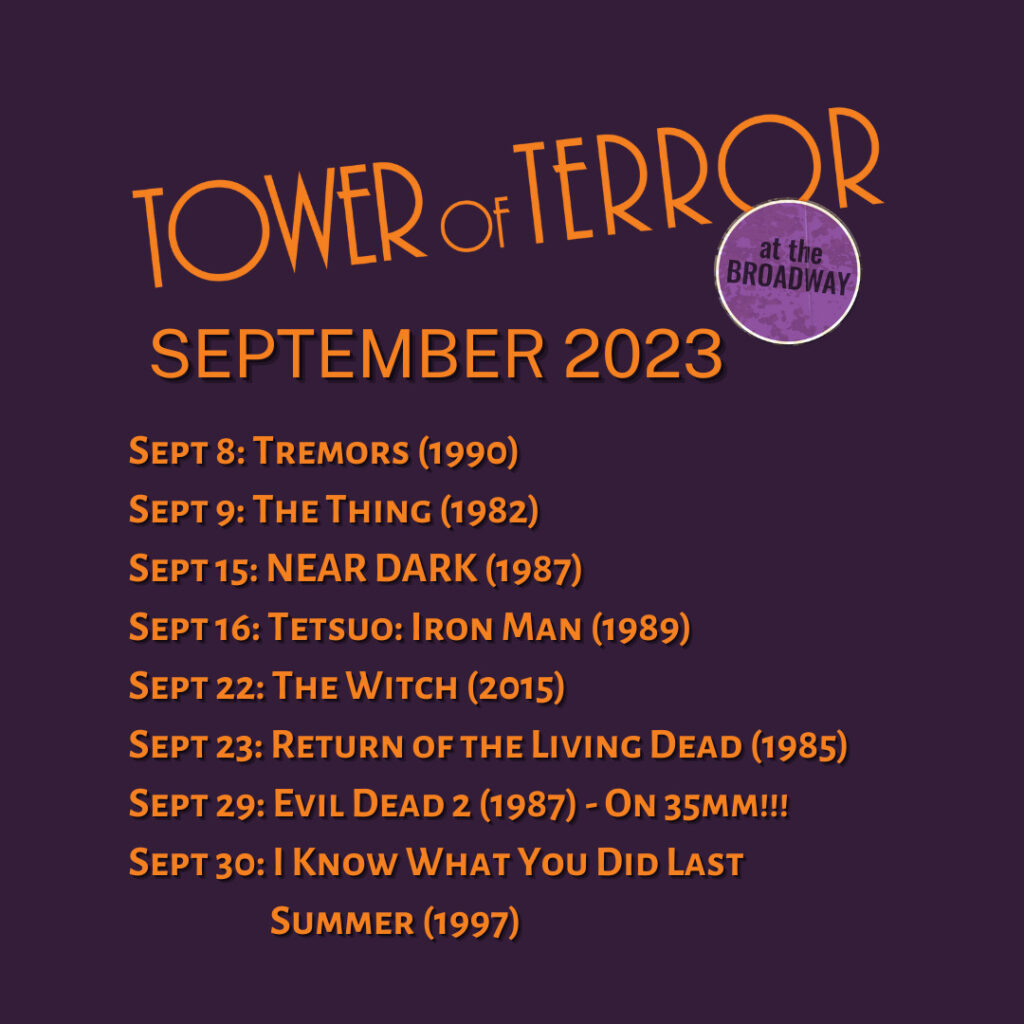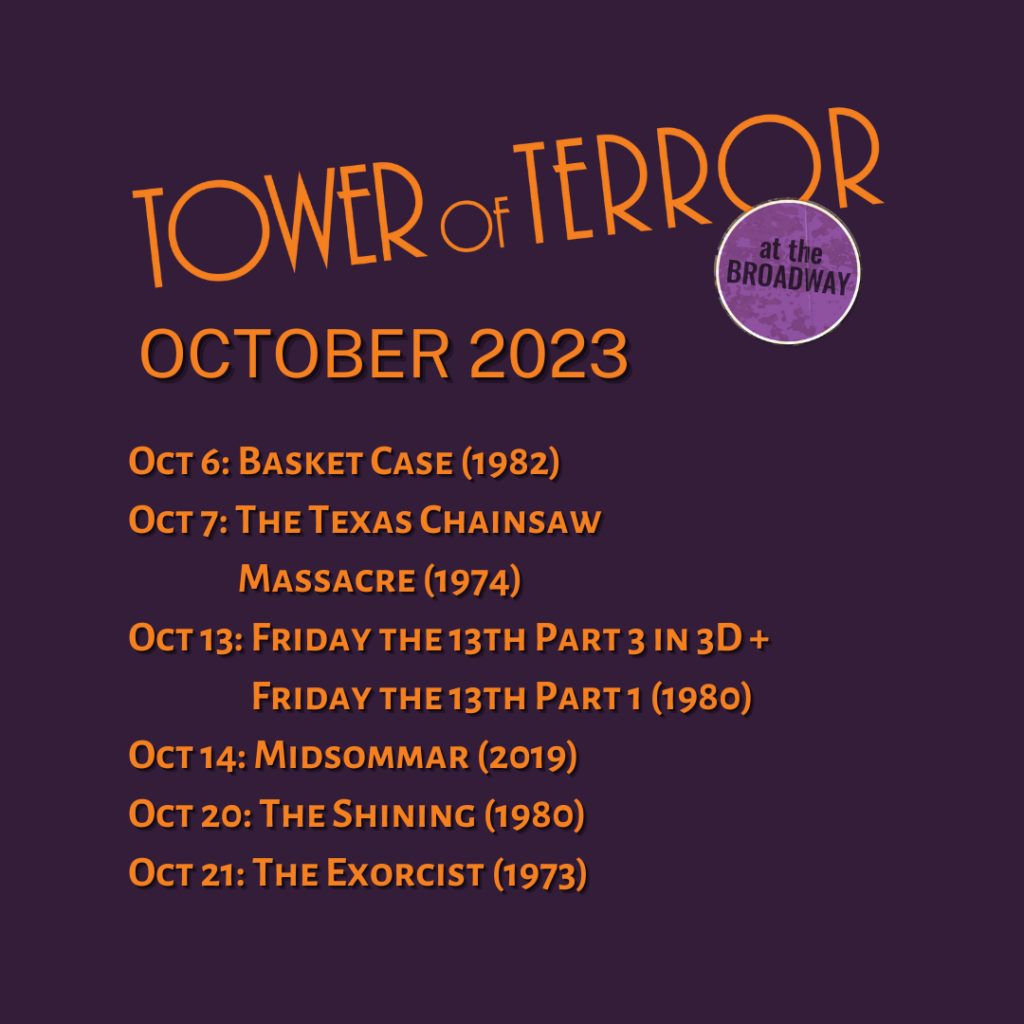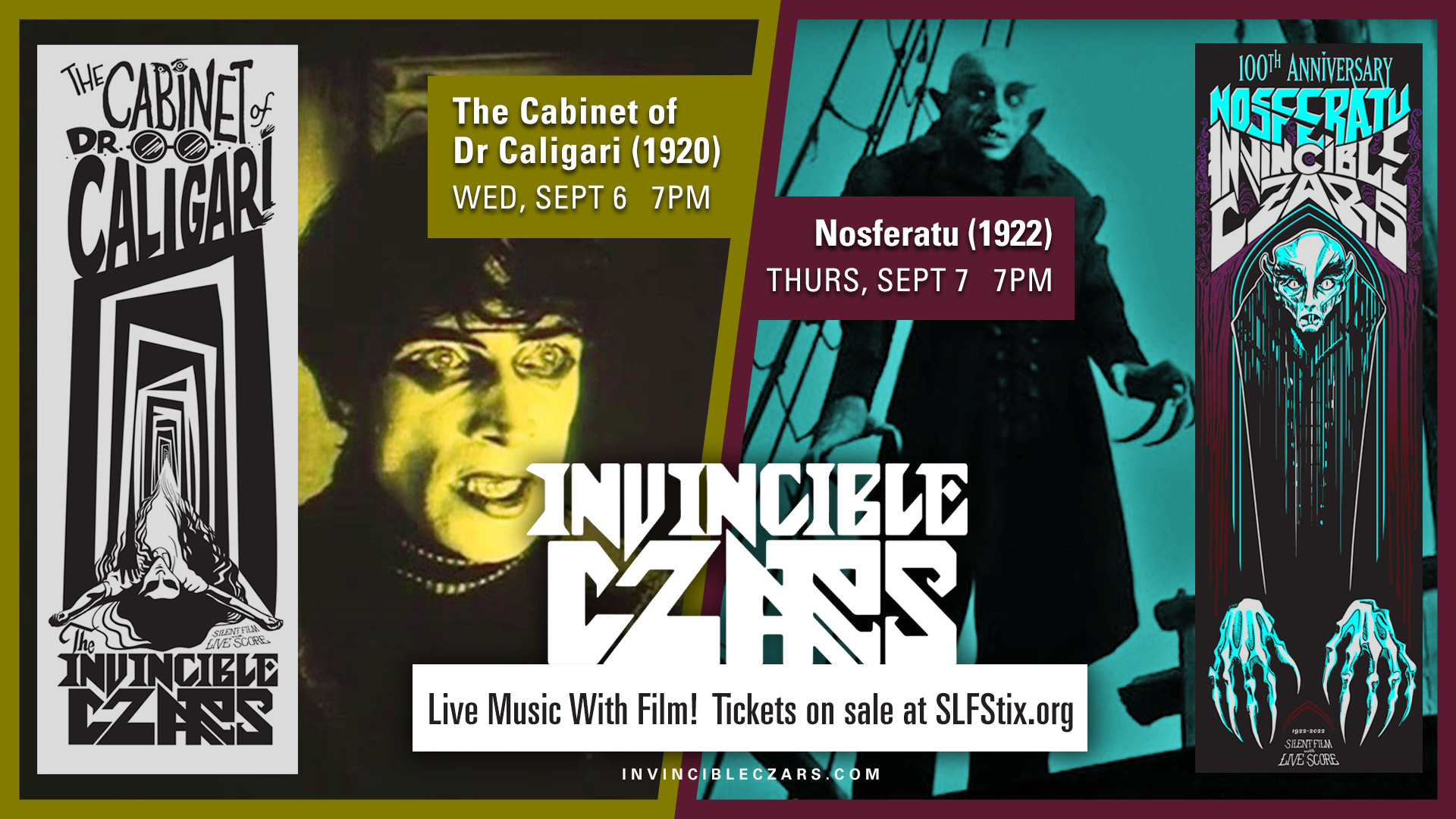
Support SLFS here or join the Red Carpet Club here. | Summer Showdown. Friday & Saturday, All Summer Long. Get tix now. | Tower of Terror 2026. Get tix now.

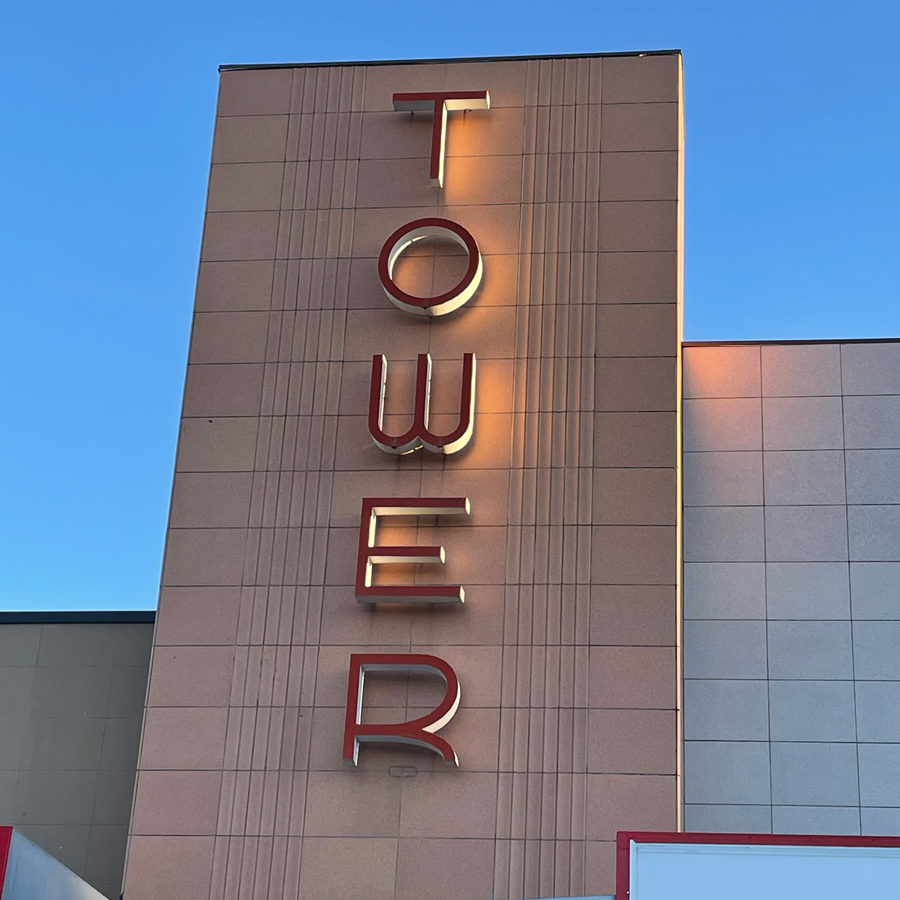
Tower Theatre Update

TOWER THEATRE PLANNING UPDATES

This page was last updated on June 30, 2026

 Our goal is to update this page quarterly. 

We extend our deep gratitude to all who have inquired about and continue to love the Tower. SLFS remains 100% committed to preserving this unique and wonderful cinematic gem.

THE VISION

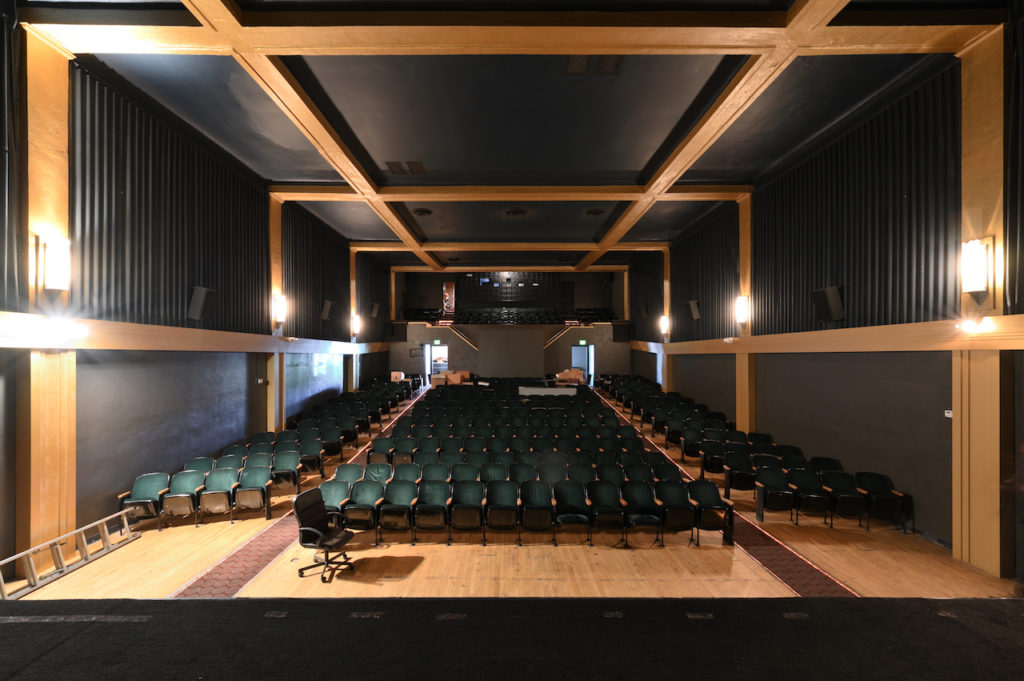
The 1928 historic Tower Theatre is being designed and renovated as an environmentally responsible crown-jewel movie house and community hub dedicated exclusively to cinematic experiences.
 
When completed, the Tower will serve as a community-based, mission-driven anchor for the 9th & 9th neighborhood. This treasured movie house will be Utah’s cinematic museum, trailblazing environmental responsibility and serving community through historic, contemporary, and unique technological film screenings, director/actor Q&As, cultural/environmental films, panel discussions, and SLFS’ curated programming. It will include museum exhibits that celebrate cinema’s history while inspiring the future of the medium.

RECENT HAPPENINGS

LATEST NEWS: 

We’re thrilled to share that Salt Lake Film Society has submitted the initial concept drawings for the Tower Theatre renovation project to Salt Lake City Building Services for the required planning review.

This milestone represents an exciting — though very early — step in the long and thoughtful process of restoring and reimagining our beloved 1928 movie house.

Developed by the Tower’s talented architectural and design partners, these drawings reflect the project’s preliminary vision. They will continue to evolve as we incorporate community input, professional feedback, and sustainable design principles rooted in our environmental mission.

Read more in our official news release here

See our news coverage in the Salt Lake Tribune here.

LATEST NEWS: 

Salt Lake Film Society (SLFS) is taking an important step in the future of the historic Tower Theatre. 

This spring we will begin preliminary facade deconstruction, a critical first step in understanding what remains of the original 1928 theater and a helping guide into its thoughtful renovation.  

The facade deconstruction will be made possible by the generous donors at Alternative Visions Fund.

WHAT TO EXPECT

  • Timing: Work is expected to begin July 6 and will continue during the summer.
  • Expected Work Hours: 7 am to 5 pm, Monday through Saturday
  • Construction Activity: Big-D Construction will carefully remove portions of the theater’s front facade
  • Road and Alley Access: The alley/roadway next to the Tower Theatre will be temporarily closed during work hours and reopened after hours for normal use
  • Daily Clean-Up: Crews will clear and clean the area each day before reopening to the public
  • Construction Fence: Will be installed approximately 18 feet from the main entrance and will not impact the sidewalk or bike lane – pedestrian and cyclist access will remain open
    Read more in our official news release here.
     

OUR COMMITMENT TO YOU

We are committed to minimizing disruption and maintaining access to surrounding shops and restaurants throughout this process. We are coordinating closely to ensure the neighborhood remains safe, accessible and welcoming.

SLFS will also have a dedicated project ombudsman available to support neighbors and address and questions or concerns. That contact will be shared with everyone shortly.

ONGOING PROGRESS

This summer also marked steady progress throughout the schematic design phase of the Tower Theatre: Next 100 Years project. Our architectural and engineering partners have been working closely with SLFS leadership and consultants to refine concepts, sustainability goals, and community-driven priorities.

Highlights since November include:

  • Salt Lake Film Society has submitted the initial concept drawings for the Tower Theatre renovation project to Salt Lake City Building Services for the required planning review.
  • Advancement of schematic drawings, which will guide the next stage of design development in 2026.
  • Continued Tower tours with philanthropists and foundation leaders, resulting in new early donor commitments.
  • Ongoing collaboration with our architecture, engineering, and design partners, who remain on schedule to complete schematic work in 2026.
  • Regular upkeep of the Tower’s exterior and surrounding property throughout the summer to maintain the building’s historic charm and neighborhood presence.

FREQUENTLY ASKED QUESTIONS (FAQ)

When will the Tower reopen?
The Tower is projected to complete major renovations later this decade. Exact reopening dates will depend on fundraising success, design development, and construction and manufacturing schedules.
 
What stage is the project in now?
We are currently in the schematic design/capital campaign build phase, scheduled to run through 2026. This stage will deliver architectural drawings, cost estimates, city approvals, and a public fundraising campaign gameplan.
 
Why is this renovation taking years instead of months?
Historic restorations of this scale require multiple stages: visioning, schematic design, design development, fundraising, and construction. Similar projects at peer cinemas have taken 5–10 years to complete. Often the perception is that such projects are only 2-3 years due to the timeframe the project “goes public.” When in reality, such projects have a quiet phase of planning and development, often with boards and behind-the-scenes, for years prior to announcing to the public such projects. Since the Tower is not in operations, this quiet phase is not really possible for SLFS. The public already knows the Tower exists and needs support to reopen. It will take all of us to make it a success, but it will take time.
 
How can I support the Tower project right now?
The most direct way is to become a sustaining donor through our Red Carpet Club. Sustaining donors keep SLFS as an institution strong and healthy so we can execute the vision for the Tower.
 
Businesses and philanthropists interested in leadership-level giving can contact us at info@saltlakefilmsociety.org for more information.
 
Will Tower programming continue in the meantime?
Yes! SLFS continues to host Tower programming at Broadway Centre Cinemas, including our annual Tower of Terror series each fall.
 
What makes this renovation environmentally responsible?
The project is rooted in biophilic design principles, energy-efficient systems, and sustainable building practices. Our Project Ethics Mandate ensures equity, environmental stewardship, and just practices guide every phase.
 
Why can’t the Tower just “patch things up” and reopen sooner?
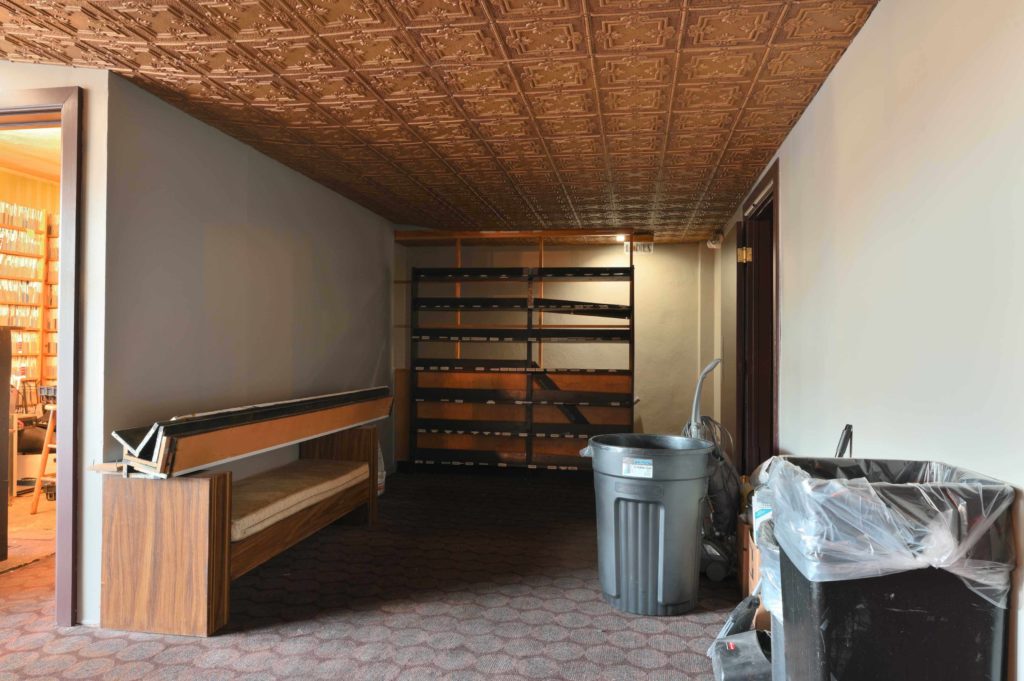
The assessments revealed significant structural and systems challenges, including roof truss reinforcement, electrical and HVAC upgrades, and accessibility improvements. Patching these without a full plan would compromise long-term safety, sustainability, and preservation goals.

THE TIMELINE

THE PROJECT HISTORY

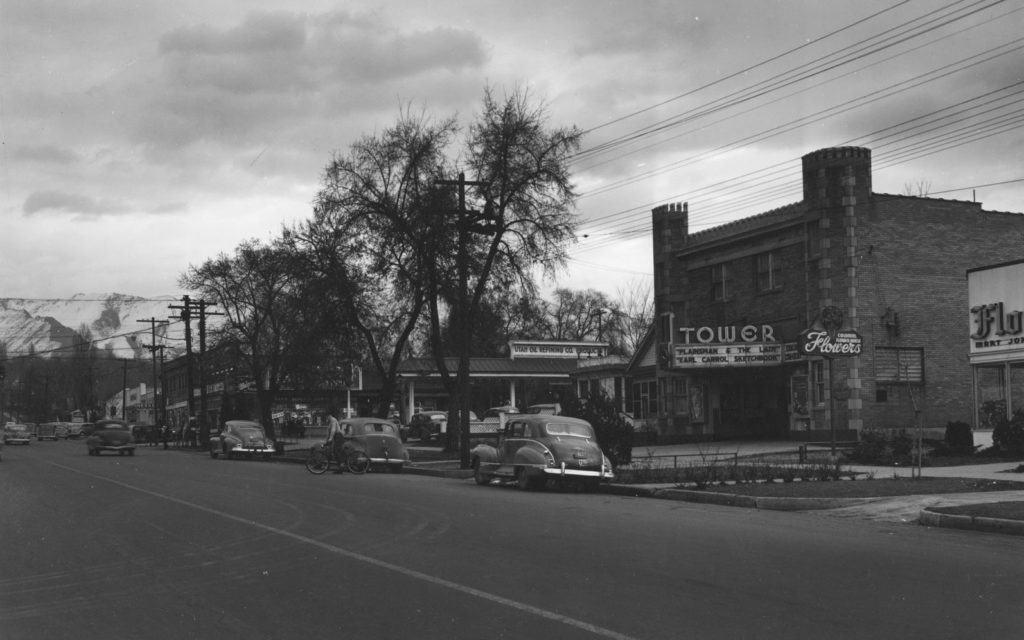
The Tower Theatre, a 1928 movie house, holds many mysteries and secrets. For 23 years, SLFS rented the Tower, limiting our ability to invest deeply in the building. In 2021, a modest lobby renovation was planned, but the historic complexity of the site escalated costs. With the Utah Theatre being demolished, SLFS purchased the Tower in 2022 to preserve it for future generations.
 
Thanks to the Alternative Visions Fund, SLFS now owns the building outright and is laying the groundwork for its preservation and transformation.
 

THE VISIONING PROGRESS

Since acquiring the Tower Theatre in December 2022, SLFS has been collaborating with arts leaders, board members, staff, and community partners to shape the Tower Theatre: Next 100 Years Project. Our phased approach — Visioning, Planning (schematics), Design, and Construction — is modeled after successful restorations across the country.
 
Your engagement is crucial. Supporting our Broadway Centre Cinemas, attending events, and becoming a sustaining donor all strengthen SLFS and this project’s future.
 
 
With love,
SLFS staff, board, advisory committees, and volunteers

Support Film

with a Donation

The Best Seat For Independent Film

The Best Seat For Independent Film

In Summary
  • SLFS is upgrading Broadway Centre Cinemas with boho-luxe, environmentally sustainable, and accessibility-forward seating and auditorium improvements—while staying open throughout the renovation.

  • At least three auditoriums will remain open at all times, ensuring uninterrupted independent film programming during phased construction.

  • All six auditoriums will be renovated with support from a grant by the AHE/CI Trust, guided by International Living Building Challenge values: place, beauty, health & happiness, equity, and the environment.

  • Two cinema styles are coming:

    • Boho-luxe cinemas with wide-base gliding seats, natural fabrics, and custom “date-night” loveseat seating.

    • Modern classic cinemas featuring roomier seating made from natural and recycled fibers in warm earth tones.

  • Accessibility is a core focus, including premium-sightline mobility platforms, flip-up armrests, improved ADA access, sensory-friendly features with KultureCity, and ongoing audio description and captioning options.

  • Environmental leadership sets a new U.S. cinema standard, with carbon-neutral manufacturing, long-lasting recyclable materials, recycled sound panels, and biodegradable, climate-positive flooring.

  • Materials and seating are designed to last 30+ years, countering industry norms that contribute to landfill waste.

  • The project is led by Kotobuki Seating Group, global leaders in public seating with over 110 years of experience.

  • SLFS invites community support by attending films during renovations and joining the Red Carpet Club to help sustain its nonprofit mission.

Read further for more details.

NEW SEATS

Salt Lake Film Society (SLFS) is transforming the moviegoing experience for cinema lovers with brand-new, boho-luxe, environmentally sustainable, and accessibility-forward seating and auditorium upgrades at the nonprofit’s Broadway Centre Cinemas location—while remaining open for films throughout the renovation. With construction phased to ensure continued programming, at least three auditoriums will remain open at all times, creating the best seat for independent film and an even more welcoming space to settle in, snack up, and get lost in a great movie experience.

Made possible by a generous grant from the AHE/CI Trust, SLFS will be upgrading all six Broadway cinema auditoriums to reflect International Living Building Challenge values: place, beauty, health and happiness, equity, and the environment. As the renovation unfolds, patrons and donors will enjoy material experiences that match the high-level cinematic curation SLFS is known for, bringing harmony between the recently upgraded presentation and sound systems and the comfort and style of a world-class arthouse experience. SLFS will also push the envelope on environmental remodels in cinema.

“This is an opportunity for SLFS to connect more directly to the environment we call home,” said Tori A. Baker, CEO of Salt Lake Film Society. “Top of mind for us as we look to the future of our facilities is the health of air quality, and the Great Salt Lake. We intend to set a high bar of environmental standards internally both with this project and future projects, contributing to our community’s wellness and longevity.”

BRAND NEW BOHO-LUXE AND MODERN CLASSIC SEATING

Movie lovers can anticipate two styles of cinemas upon completion:

  • Boho-luxe cinemas: Three auditoriums will feature wide-base seating that glides smoothly and is covered in luxurious, natural fabrics and colors. Custom “date-night” seating will convert two seats into a loveseat-like experience with side tables for popcorn, drinks, and treats.
  • Modern classic cinemas: Three auditoriums will have roomier, durable seating made of natural and recycled fibers in warm earth tones.

All cinemas will bring the community experience together for comfort and beauty, especially during sold-out screenings and filmmaker guest events. Guests can also expect innovative ADA access and turnarounds, new entry doors, improved lighting, environmental flooring, new beautifully recycled-material sound panels, and walls. Front-row guests get a little extra love too, with select seats featuring built-in footrests for peak relaxation.

ACCESSIBILITY

Accessibility is a top priority in this upgrade. Each auditorium will feature new platforms at the center rear, designed for patrons with mobility limitations offering not only improved access but also premium sightlines. SLFS will also install flip-up armrests throughout every auditorium, providing wheelchair users who prefer to transfer into standard seating greater flexibility. In addition, the theatre will introduce new sensory accessibility features in partnership with KultureCity and will continue to offer audio description devices and assisted-hearing options, including closed-captioning devices and open captions at all Wednesday screenings.

ECO FRIENDLY

All materials were sourced to achieve the highest environmental standards ever applied to cinema seating in the United States. The project incorporates carbon-neutral manufacturing and offsets, supporting responsible farming and strong economies in the U.S., and ensures innovation continues on environmental cinema seating for future arthouses and commercial cinemas to learn from. The seating concept, project coordination, and on-site installation were led by Kotobuki Seating International and Ferco Seating Systems Ltd, both part of Kotobuki Seating Group, an internationally renowned public seating group with more than 110 years of experience serving the world’s most iconic cultural, civic, exhibition, and entertainment venues worldwide. 

“There are lots of definitions of sustainability in building projects around the world, but SLFS’ is way above what anyone has done because it is defined by the leaders at SLFS and the community,

Industry-wide, cinema seating—especially “luxury” recliner systems—often rely on energy-intensive mechanisms and are replaced on five-year cycles, contributing to landfill waste. The materials used for SLFS seating and auditorium are designed to last more than 30 years and are composed of highly recyclable materials. Wall materials are manufactured from recycled bottles and plastics, and the flooring is made from natural, renewable materials such as linseed oil, wood flour, limestone, jute, and pine rosin—making it biodegradable, non-toxic, and often climate-positive by absorbing more CO₂ than it emits during production. These materials support renewable electricity use in manufacturing, high recycled content, and contribute to green building certifications such as LEED, while offering health benefits through the absence of phthalates and plasticizers.

“This is about making moviegoing feel special on multiple levels from the moment you arrive...Independent film and Utah deserve a space where audiences can truly connect and enjoy the cinematic experience—and we’re building the best seat for that future right now.”

During the renovation, community support remains essential to SLFS’s mission. Moviegoers can support the nonprofit by attending screenings throughout the upgrade and by considering membership in the Red Carpet Club.

Join the Red Carpet Club

Lorem ipsum dolor sit amet consectetur adipiscing elit dolor

Donate

Lorem ipsum dolor sit amet consectetur adipiscing elit dolor

See A Film

Lorem ipsum dolor sit amet consectetur adipiscing elit dolor

SLFS Staff on Valentine’s Day: Romantic (And Potentially Comedic) Picks

Love and romantic relationships have always held a special place in the world of visual storytelling, from the earliest on-stage stories of Shakespeare, to the romantic (and romantic-comedy) films that populate the world of cinema. With Valentine’s Day, the holiday of courtship and romance, right around the corner, what better way for Salt Lake Film Society to celebrate the power of love and film (and honor Saint Valentine) than discussing our favorite romantic/romantic-comedy films? 

While these films are often more entertaining and absurd than they are true to the real-life relationships we celebrate on Valentine’s Day, the drama of romance and the often-happy endings they portray always seem to inject us with a bit of hope and optimism about our own lives, romantic or otherwise.

As Jason Sudeikis’s character remarks in the hit Apple TV series Ted Lasso, he believes in “rom-communism”. “If all those attractive people can go through some light-hearted struggles and still end up happy, then so can we! Believing in rom-communism is all about believing that everything’s gonna work out in the end.” So take a look at what the SLFS Staff picked for their favorite romantic films, and see what stories make us believe that everything will (or won’t) work out in the end.  

Our Staff Picks for This Valentine’s Day

CITY LIGHTS (1931) – Tori Baker, President/CEO

A still of Charlie Chaplin and Virginia Cherrill in City Lights, the perfect film for Valentine's Day
Charlie Chaplin and Virginia Cherrill in City Lights
  • “The last shot of City Lights is simply one of the most heartbreaking film shots of any love story. The last line “Yes, I can see now?” and its complex meaning makes the shot a masterpiece. The hilarious journey of the Tramp falling in love with a blind flower girl — who believes he’s a wealthy patron — is a “must” in the staple of unusual romance stories. This one takes us on a journey that both affirms the best of humanity, and also slaps us with the complexities of our social strata in America.”

ADDICTED TO LOVE (1997)Stephen Simmons, Associate Director of Production

  • “‘90’s Roms Coms are my guilty pleasure (my runner up was HIGH FIDELITY). The one that stands out most is ADDICTED TO LOVE. Meg Ryan and Matthew Broderick are the perfect anti-heroes in this neurotic love story. Have you ever had your heart broken? Have you ever wanted to get revenge? This playful and hilarious black comedy pushes the boundaries of what one might do for love (or lack of). This is one of those films that is a comfort if you are down in the dumps. or just got dumped. If you have any symptoms of a broken heart, this might be your Valentine’s cure.”
IT HAPPENED ONE NIGHT (1934) – Rachel Getts, Associate Director of Digital Content

  • “IT HAPPENED ONE NIGHT has everything: Enemies to lovers? Check. Rich vs. poor? Check. Witty sexy banter? Check. This ’30s classic has just the right mixture of humor and romance.  Gable and Colbert are such a killer pairing.  From their first meeting it is without a doubt that these two are made for each other-if they could just get out of their own way.  A must-watch every year.” 

DOUBLE INDEMNITY (1944) – Marcie Collett, Associate Director of Development

  • “I actually love watching romances fail more than succeed, especially if a woman is mostly in charge, as Barbara Stanwyck is in DOUBLE INDEMNITY, or Joan Crawford in MILDRED PIERCE, or Bette Davis in THE LITTLE FOXES. I do enjoy the romantic success of Marilyn Monroe and Tony Curtis in SOME LIKE IT HOT, but really I’m happy for Jack Lemmon as he finds the most understanding lover who in the end tells him, “Nobody’s perfect.” Also Cher and Nicholas Cage in MOONSTRUCK have the most iconic romantic slap and line, “Snap out of it!” Finally, I just love Kyle in TERMINATOR when he says “I came across time for you, Sarah. I love you. I always have.”

HITCH (2005) – Jesse Sindelar, Development Manager

A still of Will Smith and Kevin James in the movie Hitch, a film perfect for Valentine's Day
Will Smith and Kevin James in Hitch
  • “For many film fans, the “rom-com” is a guilty pleasure, a bit of corny junk food to supplement the larger film palette. When it comes to HITCH though, for me there’s no guilt involved. It has all the rom-com tropes executed to stylish perfection: beautiful and charming people who struggle to make it work as they learn more about each other, slight miscommunications that hold the entire plot together, quality physical comedy between Will Smith and Kevin James, and a happy, heartfelt ending that makes all the corn and self-sabotaging failures worth it. This film makes you actually believe that love is right around the corner if you just try hard enough, or if you give a well-timed and passionate monologue full of emotional truths and clever metaphors. Plus, seeing Will Smith drunk on Benadryl is a wish I never knew I had.”

ETERNAL SUNSHINE OF THE SPOTLESS MIND (2004) – Susan Tive, Head of Philanthropy 

  • “Charlie Kaufman and Michel Gondry teamed up to create one of my favorite romantic comedies. Released in 2004, Eternal Sunshine stars Jim Carey and Kate Winslet playing Joel and Clementine, lovers who break up and attempt to make that final by erasing each other from their memories through a new scientific procedure. While they hope that a spotless mind will eliminate the past and thus the painful moments of their relationship, the film shows us that love, and its associated moments and memories become essential parts of who we are and that what connects us to one another remains indelible whether we choose to pay attention to it or not.”

Art House Films in Salt Lake City – SLFS

At Salt Lake Film Society, we love a good story on the big screen, whether it’s a love story or not. The emotion that films make us feel sits at the heart of what makes us human, and love is one of the most powerful emotions of them all. While these staff selections might not all have the happy endings or light-hearted, positive emotions you want out of a love story, we hope they offer some interesting insight into the wide variety of romantic (and romantically-comedic) films out there, and maybe even provide a good movie to watch for your Valentine’s Day celebration.

Find some Valentine’s Day cards for your favorite movie-goer from SLFS here.


To see a list of our upcoming films and events, click here.
To join our Red Carpet Club, or to learn more about RCC levels, discounts, and benefits, click here.


Valentine’s at SLFS

Valentine’s Day is coming up soon (or some us just consider it any other day, which is cool) so here’s some SLFS offerings available to all.

Need a film to watch? You can find staff recommendations in our latest blog entry here:

Marquee which says SLFS STAFF RECOMMENDS FOR VALENTINE'S DAY" in black and red text with paper hearts flowing up the right side.

Also you can find the films mentioned in this blog on our Letterboxd here:

SLFS is on Letterboxd! Follow us there for more movie recommendations.

And finally here’s some SLFS themed Valentine’s Day cards that you can give to your favorite movie-goer:

SLFS Staff: The Crowd, The Audience, and White Noise

At Salt Lake Film Society, we take a lot of pride in providing access to the movie theater experience. For many films and visual stories, the very nature of their production and exhibition is designed to be watched on the big screen, shared in a movie theater with others. In our blog this week, we hear from Landon Adams, Theater Manager at Broadway Centre Cinemas, and how his experience watching White Noise was enhanced through the movie theater experience.


“Watching a film in a theater is a profound sensory experience. We become entranced by both the screen in front of us, and the audience surrounding us. In Noah Baumbach’s White Noise, characters speak of the supermarket as a spiritual haven, a temple broadcasting soothing psychic data composed of words, images, colors and sounds. The cinema’s function is the very same. 

Adams, standing in front of the White Noise poster and posing somewhat similarly to Jack Gladney (Adam Driver)

The plot of the film concerns the exploits of the blended Gladney family. The main protagonist, J.A.K. Gladney (played by Adam Driver), is a professor of Hitler studies, who in an early scene waxes poetically to a group of wide-eyed college students about the allure of the crowd. They hang onto his every word on topics ranging from “deathward” plots, to mob mentality and the power of the collective. Their awe feeds into Jack’s sense of immortality in an unwitting ritual that summons the dark cloud of Jack’s tentative demise and sets the wheels of our story in motion.

It’s in the aforementioned lecture that Jack, pointing out into the lecture hall, singles out a terrified student as a member of the future dead. We see this moment in a POV shot, from the viewpoint of the student. Jack Gladney points directly into the camera, pointing at both the student, and projected overhead on a 45 foot screen, pointing into the theater at us. If we were watching this on TV, we might miss that throughout the film Jack is aware of us, speaks to us, asking us in states between wakefulness and dreaming, “Who are you?” So attuned to the crowd, he senses us even when alone in his room in the dead of night.

For the duration of the movie we are invited into various crowded scenes: An overstuffed home, a bustling campus, evacuation camps, supermarkets, even roadways; traffic stretching out past the horizon toward infinity. The characters’ relation to these crowds is ever-shifting. Sometimes they are leaders, sometimes members. They often look to these crowds to measure themselves and source how they should feel, or how they should act. They find comfort in crowds, a sense of subconscious immortality borne out of an esoteric reinforcement, the comfort from “the collective”.

The film opens with a monologue over a montage of car crash stunts. The monologue asserts that these crashes are a highlight reel, representing innovation and optimism. This opening contextualizes what happens later in the film while Jack is driving down the highway. In the midst of a crisis our cast witnesses an accident, or at least the children do. When it happens, Jack is looking away.

Again we see the action as a POV shot, this time inhabiting the viewpoint of Jack’s children. A car rushes into the frame, overturning in a blink-and-you-miss-it moment, and when it occurs, Jack is looking away, into the camera, as if watching for  our reaction, to determine from us, the audience, how he should feel.

A still from the film White Noise, a movie shown at the Broadway theater in SLC
A variety of shots in White Noise achieve their true visual and communicative power only when seen on a 45-foot screen in a dark room with strangers.

The movie theater provides a communal experience, often complex and of multi-dimensions. We gather under the flashing lights of the big screen and allow ourselves to sink into the story, letting our  worries fall away across a paltry runtime. Sharing this with an audience makes the spell all the more potent. The people surrounding us help transform the experience by virtue of their presence and individual experiences.

It’s these fellow movie-goers, these crowds of eager enthusiasts, who  breathe life into a film, and ground us in the experience. It’s our physical presence with others that creates and completes this unwitting ritual, just as in the film. Acting as kindred travelers on the cinematic highway, we escape down reality’s off-ramp toward the open-road comfort of the surreal, where together we are immortal beneath the silver screen of the theater.”


To see a list of our upcoming films and events, click here.
To join our Red Carpet Club, or to learn more about RCC levels, discounts, and benefits, click here.


Thank You And a Happy New Year From SLFS

2022 Is Nearly Gone, But The Memories Live On

Hello independent film fanatics, and congratulations on making it through another year! As we all worked our hardest to make it through the days, months, and year of 2022 whole, many of us found support and solace in film, and the incredible visual stories that we are engaged in. Whether exploring the multiverse to appreciate the true value of life and kindness in Everything Everywhere All at Once, or enjoying a quirky couple’s love for volcanoes and each other in Fire of Love, or learning more about those who are hearing-impaired and the beautiful burden of family in CODA, we have screened many beautiful and breathtaking stories at the Broadway in 2022.

EVERYTHING EVERYWHERE ALL AT ONCE
FIRE OF LOVE
CODA

Perhaps you got one of the last tickets to a Rocky Horror Picture Show accompanied by live performers, or maybe you were the only one in the theater to see a captivating, foreign independent film on a Tuesday afternoon; Salt Lake Film Society is proud and privileged to exhibit all kinds of incredible stories for the Salt Lake City community, all supported by dedicated patrons like you.

Supporting Independent Film in 2023 With SLFS

If you’ve enjoyed your experiences at the Broadway, and if you value the type and quality of films you see with SLFS, please consider supporting us! Join the Red Carpet Club, or make a donation online right now at SLFS.org, or at the theater the next time you see a film; even better, make a donation before Sunday and reduce your taxable income for the coming year! Every dollar supports our mission to exhibit, engage, and educate the Salt Lake City community through independent film. We couldn’t do it without you.

a photo of some the SLFS staff and board in their office in downtown Salt Lake City


Some the SLFS staff and board members at the SLFS office

From our Salt Lake Film Society family to yours, thank you for engaging with diverse stories and supporting independent cinema in Salt Lake City, and we look forward to seeing you all in 2023!


To see a list of our upcoming films and events, click here.
To join our Red Carpet Club, or to learn more about RCC levels, discounts, and benefits, click here.


SLFS Staff: Holiday Picks 2022

In Salt Lake City, the holiday season is a time of joy, compassion, and nostalgia. Whether you are spending time with family and friends, or  enjoying the snowy slopes and warm drinks, this time of year is about loving traditions and memories as well as making new ones. Whether it’s the holiday movie you watched every year as a family, or going out to your local theater on Christmas Day, film has a special place in many of our hearts during this festive period. 

At Salt Lake Film Society, our staff also have a special place for movies in their hearts during the holiday season. From all-time holiday classics, to obscure independent films, to the never-ending debate on whether or not Die Hard is a Christmas movie, our love of film and cinema doesn’t take time off for the holidays. Check out the wide variety of picks and preferences that SLFS  staff enjoy during this time of year and who knows, maybe you will find a new title to add to your family holiday movie tradition!

TOKYO GODFATHERS (2003)Tori Baker, President/CEO

      • “Consider starting a tradition of viewing the masterwork Tokyo Godfathers, a tale that will take you on a sentimental journey that might just also break your heart in the best way possible—the way that makes you want to pursue more understanding of humanity and it’s complexities.”

    AUNTIE MAME (1958) – Marcie Collett, Associate Director of Development

        • “During holidays – or whenever I’m in need of inspiration on abundance and fabulousness – I treat myself to Rosalind Russell in Auntie Mame. Mame’s memoir is Live, Live, Live!, and her motto is: “Life is a banquet, and most poor suckers are starving.”

      a still of gremlins caroling from the holiday movie Gremlins
      GREMLINS (1984) is actually a Christmas movie, complete with Gremlin carolers!

      GREMLINS (1984) – Rachel Getts, Associate Director of Digital Content 

          • “A classic funny alternative holiday movie that doesn’t take itself too seriously.  The gremlin bar scene alone is a bizarre surreal hilarious mess. Wouldn’t change a thing.”

        SCROOGED (1988) – Stephen Simmons, Associate Director of Production

            • “I watch this film every year. It never gets old. It’s got everything. The cast is a 90’s comedy dream team. It’s spooky, sarcastic and filled with Christmas spirit(s). The speech Frank Cross (Murray) gives at the end makes me tear up…..every damn time.”

          CAROL (2015) – Ally Lantz, Theater Operations Manager

              • “One of my favorite films that is altogether beautiful and heartbreaking (and also happens to have a Christmas road trip involved). In other words, be sad, do gay, and Merry Christmas.”

            A PISTOL FOR RINGO (1965) – Landon Adams, Theater Operations Manager

                • “Have you ever watched a spaghetti western and thought “This would be improved with a Christmas theme?” Well A PISTOL FOR RINGO exists anyway. It opens with two men meeting in the center of town at high noon, hands near their gun belts. One moves fast, offering his hand: “Merry Christmas, Jack”.”

              RECKLESS (1995) – Brandon Suisse,  Associate Director of Development

                  • “A bizarre and largely forgotten dark comedy for anyone who has ever been overwhelmed by the relentless giddiness of the holiday season. While the satire may not feel scalding (or coherent) enough for some, it ultimately arrives somewhere that’s unexpectedly un-pessimistic. This unpolished gem of a movie is a must-see for Grinches everywhere–if you can find a copy.”

                IT’S A WONDERFUL LIFE (1946) – Jesse Sindelar, Development Manager

                    • “An established holiday tradition for many, it’s also the blueprint for most holiday movie storylines: not appreciating what you have until it’s gone. I’ve cried at the end of every watch, and I’ll keep on crying in the future. Merry Christmas you wonderful old Building and Loan!”

                  SLEEPER (1973) – Susan Tive, Head of Development

                      • “As a child, my Jewish family’s Christmas tradition was dinner at a Chinese restaurant followed by a movie. In 1973, it was SLEEPER, Woody Allen’s dystopian comedy which became for me one of those cinematic treasures I summon again and again and when I do, I’m still a kid too young to get the punchlines but not yet too old to delight in the memories of my parents’ laughter.” 

                    THE FAMILY STONE (2005) – Amy Beth Aste, Head of Theater Operations

                        • “The actors alone make me nostalgic, Sarah Jessica Parker, Diane Keaton, Rachel McAdams, Dermot Mulroney, Luke Wilson, Claire Danes, Craig T. Nelson, Paul Schneider, all actors I loved in the 90’s! They come together in one story of a family that deserves your suspension of disbelief and will make you laugh, cry, and want to learn sign language.”

                      TANGERINE (2015) – Daniel de Santiago,  Front of House Staff

                          • “My love for this holiday film goes not just towards its hilarious dialogue, but how the film was captured. Sean Baker is amazing in how he documents his scenes, they feel more like a documentary then a scripted film, it’s excellent directing. Plus, the first line in this film is “Merry Christmas B***H”.”

                        POLAR EXPRESS (2014) – Sophie Nielsen,  Front of House Staff

                            • “All aboard, and hold on TIGHTLY! I make my family watch POLAR EXPRESS every Christmas. Everything about it is magical: the scenery, the music, the friendship, the actual magic, and the fact that they only had to hire one voice actor (Tom Hanks).”

                          a still of Olivia Hussey in Black Christmas, a holiday slasher from 1974
                          Olivia Hussey in Black Christmas (1974)


                          BLACK CHRISTMAS (1974) – Patrick Charles, Theater Operations Manager

                              • “An amazing proto-slasher movie directed by Bob Clark that mixes tons of laughs with extremely dark Christmas-themed mayhem. Clark would go on to direct, A CHRISTMAS STORY, which is quite similar to BLACK CHRISTMAS, minus the obscene phone calls and murders.” 


                            A CHRISTMAS CAROL (1984) – Guy Wheatley, Head Projectionist

                                • “When it comes to epitomizing the character, George C. Scott *is* Ebenezer Scrooge. You believe his every caustic remark about Christmas, and his redemption is the most poignantly reminiscent of Scott’s own career. This Christmas Carol is the only Dickens you need.”

                              JUST FRIENDS (2005) – Abby Derrick,  Front of House Staff

                                  • “Reminds me of long winter nights spent with my sisters. Every Christmas Eve, we’d stay up all night watching this over and over, the jokes getting funnier with every watch. It’s the perfectly funny movie to ring in the new year.”

                                MIXED NUTS (1994) – Zoey Wiltsey, Event Manager

                                    • “For me, the holiday season doesn’t really start until I’ve watched Mixed Nuts. It’s been a tradition since early adolescence. I love Nora Ephron’s dark sense of humor and I find the 90’s sensibilities very comforting around this time of year.”

                                  Holiday Films at SLFS

                                  We hope the variety of seasonal movies and personal experiences shared by our staff add some cinematic perspective to your holiday season (and maybe even some inspiration for the next holiday movie night!).

                                  At Salt Lake Film Society, we can’t think of a better present for the people you love then the gift of cinema. Consider sharing and supporting access to quality independent film this holiday season, with a gift membership to our Red Carpet Club!


                                  To see a list of our upcoming films and events, click here.
                                  To join our Red Carpet Club, or to learn more about RCC levels, discounts, and benefits, click here.


                                  Find this holiday list on Letterboxd! We have curated lists from SLFS Staff there, including the films mentioned in this post, here.

                                  SLFS and The Voices Behind Filméxico

                                  At Salt Lake Film Society, our mission revolves around the power that film has to not only entertain our community, but also help them engage. We are proud of the independent films we screen, and the powerful and engaging stories they tell, and there’s no better example of this engaging communal power than our Cultural Film Tours.

                                  Poster featuring a list of films screening during Filmexico 2022
                                  Click on this poster for the upcoming schedule for Filméxico, and find a film and panel that interests you most!

                                  As one of the longest-running and most highly-attended cultural tours we help put on at SLFS, Filméxico has been offering access to incredible selections of contemporary Mexican cinema in Utah every year for the last decade. With extensive panel discussions and prominent works by Afro Mexican and Indigenous filmmakers (and now an extensive virtual community as well), Filméxico continues to provide culturally enriching and educational experiences for the Mexican and non-Mexican community alike in Salt Lake City. 

                                  This incredible visual storytelling tour of Mexican culture and creators wasn’t organized overnight though. Filméxico is realized every year through a large and extensive collaboration with our presenting partners Consulado de México en Salt Lake City, and Artes De México en Utah, as well as a long list of other organizations and individuals (which you can see in it’s entirety at the end of this blog). In our post this week, we want you to hear from a few different folks and organizations who make this incredible exhibition of Mexican independent film possible. Find out what they love about Filméxico, and get a preview of some films and panel discussions you won’t want to miss.

                                  Hear From Those Who Made Filméxico Possible

                                  “Filméxico is a unique platform that allows people to learn about the great diversity of the peoples and cultures of Mexico with the purpose to create cultural awareness and cultural connections within the US. People feel represented, included, authenticated by this important venue, and we’re especially excited for people to come out and see. Los Gigantes del Pastizal (The Grassland Giants). Filméxico has become a way to celebrate our diversity of film through art and to give opportunity to our community to have a voice through the panel discussions. Together we celebrate and elevate the voices of our community” 

                                  “Salt Lake City is lucky to have Filméxico because it is a culturally enriching experience unique to our town. The documentaries offer valuable educational experiences, and the features and shorts give us a glimpse into Mexico’s rich independent film scene. ¡Gracias a SLFS y viva Filméxico!”

                                  Filméxico has been one of my favorite film festivals for years as it’s a space that uplifts the work of contemporary Mexican filmmakers. Through the impeccable programming offered, Utah audiences experience Mexico in an authentic and unique way. I was most impacted—visually and emotionally—by the documentary Mamá (Mom), a film by director Xun Sero. Through intimate conversations between the filmmaker and his mother, we learn about their past as they try to understand it and each other. Sero’s mother is quick-witted and wise, and her story will make you smile and break your heart all at the same time.

                                  "Representation STILL matters! As a queer Mexican educator and indie film buff, it is often hard to find myself represented in the documentaries and narratives shown on the big screen. Filméxico brings the stories of my people to life! I also get to share these films—and free passes—with my students at Salt Lake Community College where I work. Being the oldest of three, I’m most looking forward to watching Mamá (Mom). The often-contentious bond between my own mother and I makes me excited to see these themes come alive in a theater. Thank you Salt Lake Film Society for reminding our community that BROWN IS BEAUTIFUL! "

                                  SLFS Cultural Tours

                                  These snippets are from just a few of the extraordinary people who volunteer their time to make Filméxico such an authentic and engaging experience for all. Through the extensive collaboration and planning process, SLFS and these dedicated organizations have worked tirelessly to ensure that the films and events presented are relevant and meaningful to the people they serve, because they are co-created by the people they serve.

                                  So come out to Broadway Centre Cinemas starting this Thursday 11/10 thru 11/17 to experience seven days of authentic Mexican stories told on the big screen. Take the opportunity to view prominent works by indigenous filmmakers, as well as seasoned, new and local talent. Engage with a series of panel discussions by Mexican filmmakers, Utah community leaders and cultural binational specialists and allies, available on slfsathome.org.

                                  Browse the list of films, panels, and showtimes at slfs.org/filmexico.

                                  PRESENTING PARTNERS

                                  • Salt Lake Film Society
                                  • Consulado de México en Salt Lake City
                                  • Artes de México en Utah

                                  MAJOR GRANTORS

                                  • ZAP – Salt Lake County Zoo, Arts & Parks
                                  • State of Utah Legislature
                                  • Utah Department of Arts & Museums
                                  • National Endowment for the Arts
                                  • Salt Lake City ACE Fund

                                  SPONSORS

                                  • University of Utah Center for Latin American Studies
                                  • Secretaria de Cultura
                                  • University of Utah Tanner Humanities Center
                                  • IMCINE
                                  • University of Utah Osher Lifelong Learning
                                  • Mexicano-Latino Institute in Utah
                                  • Sundance Institute
                                  • Spyhop
                                  • Monarca Restaurant
                                  • Zólupez Cerveza


                                  To see a list of our upcoming films and events, click here.
                                  To join our Red Carpet Club, or to learn more about RCC levels, discounts, and benefits, click here.


                                  SLFS Staff: A Closer Look at Diversity Tropes in The Horror Genre

                                  As Allhallows Eve fast approaches, SLFS and it’s staff are proud to embrace the festivities of spooky season, through horror classics we screen every weekend for Tower of Terror, and of course our upcoming Rocky Horror Picture Show. In our blog this week, we hear from Patrick Charles, Theater Manager at Broadway Centre Cinemas and mastermind behind numerous giveaways and decorations for Summer Showdown and Tower of Terror, as he takes a closer look at the diversity tropes associated with horror films.


                                  As the world has slowly become more conscientious of antidiscrimination and diverse representation in the 21st century, the diversity of characters in film has become a welcome priority. However, in the horror genre, because of its intense and often socially taboo content, there are some discriminatory tropes and stereotypes of minority characters that continue to be unfairly associated with the genre.

                                  A still of Regina Hall and Ghost Face in the horror movie spoof, Scary Movie
                                  The Scary Movie franchise, known for spoofing horror films and their tropes, has likely reinforced the perception of these tropes and their frequency

                                  Two of the most common of these tropes include the role of BIPOC characters, and the role of women, and their treatment and depiction in horror films. For BIPOC characters, the trope is that their presence in a horror film is usually tokenistic, and they will likely be an early victim of the killer, if not the first victim. In the case of female characters, the assumption is that horror films are misogynistic, because women are often represented through sexual and violent objectification of their bodies. However, we rarely take the time to consider how common or accurate these tropes and assumptions really are.

                                  In the genre of horror, the role and depiction of BIPOC and women characters has been more favorable than one is led to believe. This brief blog post will take a look at some of the misconceptions regarding these tropes, the reality of their representation in the current and past worlds of horror, and how many horror films have been ahead of the times in regards to representation and respect of diversity. 

                                  The BIPOC Character Dies First

                                  “Brothers don’t last long in situations like this”

                                  Joel (Duane Martin), Scream 2

                                  Variations of this saying have permeated popular culture surrounding horror films for years. The black character dies first, we hear it time and time again, more recently echoed in horror spoofs such as Scary Movie (2000) and its subsequent sequels. This trope that has permeated both the horror world and transferred over to popular culture has become a long running joke; if a person of color is in any type of horror film, they will likely be killed off first. The perception is that horror films use these characters to further their diversity quotas and body counts. 

                                  Now while this trope has existed in some horror movies, the reality is that in many of the genre’s most well-known and acclaimed films, BIPOC characters have not only survived, but thrived. We see important BIPOC characters in numerous George Romero movies, whose films and presence are iconic for the genre. Dawn of the Dead (1978), arguably the most popular of Romero’s original “Dead Trilogy”, brought the world Ken Foree playing the character of Peter.

                                  a still of Ken Foree in the horror film Dawn of the Dead
                                  Ken Foree, who plays Peter in Night of the Living Dead (1968)

                                  Foree gives an amazing performance and plays a character who triumphs in the world of horror. Peter makes smart choices, is level headed when others are not, and is one of the few characters who survives the whole film (a rarity for any horror film character). Duane Jones, who portrays Ben in Romero’s Night of the Living Dead (1968) is another smart and capable character who survives almost until the very end, and Tony Todd, who played Ben in Tom Savini’s 1990 remake, furthered the depth of the iconic character even more.

                                  John Carpenter is another director who has cast BIPOC characters in his iconic films, characters who last much longer than the common tropes would have us believe. Keith David stars in Carpenter’s The Thing (1982), playing the character of Childs, and while David is not the main star, Childs is a nuanced and well-developed character, untrusting of every other character, yet ambiguously surviving to the very end. 

                                  BIPOC characters are obviously not stand-out characters in every horror film, but importantly, the trope of their early death is a bit of a misconception. In fact, one can argue that the most iconic films and directors in the cinematic world of horror have been at the forefront of BIPOC representation. Their casting and storylines for BIPOC characters, especially in a mid-to-late 20th century which had yet to prioritize respectful representation, were impressively ahead of the curve.

                                  Objectification of Women Through Sex and Violence

                                  Another consistent character trope that horror film is often associated with is the sexual and violent objectification of women. Unfortunately, aspects of this stereotype are still prevalent in the genre, whether it’s the ridiculous, skimpy outfits or nude scenes that frequent most of the Friday the 13th films, or the excessively gory and brutal killing of female characters in the Texas Chainsaw Massacre series. 

                                  However, there is another trope, one that is arguably even more prevalent in the genre, that challenges this objectification. “Final Girls” are typically the sole female character that survives the entire movie before eventually besting or killing the main antagonist, and horror films from the ‘80’s are filled with them, including some genre juggernauts like Halloween, Nightmare on Elm Street, Hellraiser, Friday the 13th, and so on. The “Final Girl” has been a staple of horror films for decades, and through the emphasis of female empowerment and the conquering of often-male killers, offers an important contrast against the misogynistic label often placed on horror films.

                                  Jamie Lee Curtis, the original “Final Girl”, in Halloween (1978)

                                  Jamie Lee Curtis, as the character of Laurie Strode in Carpenter’s Halloween (1978), is the original “Final Girl”. Laurie is a shy and reserved babysitter who ultimately puts up a valiant fight against Michael Myers, protecting the children she is watching, and Curtis went on to reprise the character several more times, most recently as 2018. While Hooper’s The Texas Chainsaw Massacre (1974) and Clark’s Black Christmas (1974) were popular preludes to the slasher era, Halloween is considered by many to be the first true slasher film, ushering in a golden era of slasher movies and “Final Girls” in the 1980’s. 

                                  A Nightmare on Elm Street (1984) is another example of an iconic film with an iconic “Final Girl”. Heather Langenkamp plays the role of Nancy Thompson, who faces off against the nightmare-stalking maniac Freddy Kruger. Nancy does her research, makes a plan, and takes Freddy down, and although her survival is left rather ambiguous, she does return in Nightmare on Elm Street Part 3 (1987). While Nightmare came a little later in the ‘80’s than the vast majority of iconic slashers, it still embraced the power of the female protagonist that Halloween had laid the groundwork for.

                                  From Sigourney Weaver in Ridley Scott’s Alien to Mia Goth in Ti West’s X, “Finals Girls” have been an inherent presence in any film over the last five decades that incorporates horror elements. While there are unfortunately plenty of examples of misogynistic attitudes toward women in some horror movies, “Final Girls” have continuously offered an important juxtaposition to those examples.

                                  The “Final Girl” is a role that fights against forms of evil or otherworldly threats, a role that is seen as a protector, as well as a betterment to the world of horror movies. Ultimately, it is a role which has established an important trope that counteracts and may eventually prevail against the more misogynistic trends of the genre.

                                  To see a list of our upcoming films and events, click here.
                                  To join our Red Carpet Club, or to learn more about RCC levels, discounts, and benefits, click here.


                                  SLFS is spooky on Letterboxd! Find curated lists of horror films from SLFS Staff, including the films mentioned in this post, here.

                                  Follow us on Letterboxd for more updates and recommendations.

                                  How Films Make Us Feel Emotion

                                  While some folks might not readily admit to it, many of us have cried while watching a movie. These could be tears of sadness for the looming passing of the family dog in Marley and Me, or of exultation during scenes of joyous reunion and relief at the end of It’s a Wonderful Life. For many people, (cinephiles and non-cinephiles alike), there is at least one movie scene at some point which has overwhelmed them with an acute wave of emotion.

                                  a still from the final scene of the film It's a Wonderful Life
                                  For many, the iconic ending of It’s a Wonderful Life is a guaranteed tear-jerker

                                  The stories that film tells and the immersive way it tells them have always had a capacity to foster our sympathetic and empathetic tendencies, help us grow emotionally, and connect more with others. Whether you watch a documentary about human suffering thousands of miles away or a narrative that reveals the less than evident truths about your own life, watching a film can be emotional, and that is a good thing. How does film do this and what exactly about the art of film makes us feel the emotions we do when we watch? 

                                  This powerful quality of film sits at the heart of why we love it here at SLFS, and why we are committed to providing access to independent film to our community. We are proud to show a wide variety of independent films that help our patrons not just think, but also feel. The more we can understand and discuss this emotive-inducing power of film, the better all of us in our community can be at engaging with the diverse and thought-provoking benefits of cinema.  

                                  Independent Film = Your Brain On Empathy

                                  Emotions are a vital aspect of the storytelling ability that a movie has. Emotions are also vital characteristics of the larger human experience; they are a fundamental part of what makes us sentient, complex creatures. In the modern age of scientific research and medical technology, emotions can be more precisely defined and measured through brain scans of our neural networks and what we know about the different chemicals that our brains release to cause emotional states. And as it turns out, movies are more than capable of inducing and effecting these states.

                                  Humans are naturally empathetic beings; when we see or hear something sad, we are likely to feel sad. When we watch a story on the big screen, we automatically generate some investment in the characters. The way we absorb their depicted plights and decisions often invests us in an emotional cinematic reality, even if we are not directly experiencing the situations in question.

                                  There are countless studies that demonstrate a link between storytelling and empathy, but it also doesn’t take a scientific study to know that movies offer one of the more effective forms of storytelling in human history. In fact, film is so effective at inducing empathy and emotion in people, it is used by researchers as a method to actually induce emotions in subjects, in order to study the brain simultaneously as they feel them. 

                                  Different neural networks activate different types of empathy in research participants who watched an intense scene from Black Swan

                                  For neuroscience researchers like Talma Hendler at Tel Aviv University in Israel, movies offer a useful tool to study how emotions fluctuate in real time and what’s going on in the brain when we feel certain ways. Hendler and her team have been investigating neural networks in the brain and their role in empathy, and have found evidence for two types of empathy. Mental empathy, when people step outside of themselves to think about what another person is thinking or experiencing, and embodied empathy, more of an in-the-moment internalization and adoption of an experience and its emotions.
                                  It’s hard to say which type of empathy an audience member might be feeling during a specific scene, whether they are understanding the rationale and perspective of a character’s feelings, or more acutely feeling the character’s feelings themselves. But one thing is for sure; the empathetic storytelling that film is capable of can play with our emotions like few other forms of media can.

                                  Playing With the Audiences Emotions

                                  As much as there is to understand about the science of why film makes us feel emotion, what about the techniques behind filmmaking itself? How do filmmakers shape their narrative and use all the storytelling tools at their disposal to make us feel?

                                  When filmmakers are crafting shots and dialogue, and considering how to tell the story of the scene, while they might not be contemplating the science of neural networks or the difference between mental and embodied empathy, their attention towards the emotions of their audience is quite purposeful.

                                  “We’re always thinking about how to get into an emotional state, moment by moment, and how to bring as much of the audience along with us,” said Darren Aronofsky, acclaimed director of psychological dramas like Black Swan, Mother!, and The Wrestler in a Wired 2014 interview. It could be through stunning visual perspectives of proper cinematography, swelling crescendos of an orchestral soundtrack, or a well-written line acted and delivered to perfection; filmmakers craft their scenes and visual storylines with concentrated intent of making their audience feel.

                                  an image of neural networks overlayed on a brain, next to a still from the film Black Swan
                                  Javier Bardem and Jennifer Lawrence in Mother!, another psychological horror film from the mind of Darren Aronofsky

                                  As much as the artistry of a film and its filmmaker plays a big role in this, there are also other psychological aspects of film that naturally contribute to the keen emotions that many moviegoers feel when they watch on the big screen. According to professor of psychology at Washington University, Jefferey Zachs, mimicry and music play vital roles in the emotions that film can make us feel.

                                  “[Our brains] say that it’s a good idea to mimic the visual input that we’re seeing…if you watch somebody in the theater and there’s a smiling face filling the screen, most of the audience is going to pop a little bit of a smile…In film, a filmmaker has the opportunity to integrate those things very tightly. They can control exactly what’s shown of the face, and what else is present [on the screen].”

                                  In regards to music in film, Zachs says the type and the timing also play a big role in inducing emotion. Sad moments in movies use slow music composed in a minor key to hammer home the sad things they depict. Minor key music can induce the same kind of sad feelings that we feel when we see people cry or watch bad things happen to people. “You put all those things together and it’s just taking the mechanisms that we encounter in real life and just really pushing all the buttons at once.” Zachs concluded.

                                  Independent Films in Salt Lake City – SLFS

                                  At Salt Lake Film Society, the emotional power of visual storytelling is at the heart of the impact we make in our community. Whether it’s anecdotal or based in scientific research, there is  consistently reaffirmed evidence that a compelling visual narrative can alter our brain’s chemistry. Films can make us feel, in a way that is strangely close to how we might feel if we were actually living these emotional experiences ourselves.

                                  This invaluable form of sharing an emotional connection with others reinforces the unique and underrepresented voices inherent in our  independent film programming. This pairing helps cultivate an introspective and compassionate arts experience for the entire community, a process that SLFS has proudly been a part of for over 21 years. So come join us for an independent film at Salt Lake Film Society, and maybe you too can be a part of an emotional experience bigger than yourself.

                                  To see a list of our upcoming films and events, click here.
                                  To join our Red Carpet Club, or to learn more about RCC levels, discounts, and benefits, click here.